
Adventure Holiday Pacing: Matching Physical Demands to the Youngest Traveler’s Stamina
Adventure-holiday pacing is the planning of activity duration, intensity, rest, and recovery so that every traveler—especially the youngest—can participate safely and enjoyably. The practical rule is to set the day’s demands around the child with the least stamina, not the adult with the most. That means checking age-appropriate activity guidance, building in breaks, adapting plans to weather and terrain, and watching for signs of fatigue. The Centers for Disease Control and Prevention (CDC) recommends that children and adolescents aged 6–17 get at least 60 minutes of moderate-to-vigorous physical activity daily, but that is a health target—not a requirement to sustain strenuous holiday activity for hours. A well-paced trip balances movement with food, water, shade, sleep, and flexible alternatives.
Adventure-Holiday Pacing Matches Activity Demands to Youngest-Child Stamina
Adventure-holiday pacing is a family travel strategy for matching exertion to the youngest traveler’s current ability and recovery needs. It is not a clinical standard with one prescribed speed or distance: children differ in age, fitness, health, experience, and how they respond to heat, altitude, uneven ground, and excitement. The American Academy of Pediatrics (AAP) emphasizes that children need adequate fluids, rest, and protection from heat during physical activity. In practice, the youngest child’s observed comfort is a better planning limit than an adult’s pace or a route’s advertised difficulty.
Useful measures include the length of the active period, total distance or elevation gain, time between breaks, temperature and sun exposure, and how quickly the child recovers after exertion. None works as a universal pass-or-fail threshold. A short, steep climb in hot weather can be harder than a longer, level walk in cool conditions, while a child who is excited early in the day may become tired suddenly.
Daily activity is not the same as an all-day adventure
The CDC’s 60-minute daily activity recommendation for ages 6–17 describes a health goal that can be accumulated through play, active transport, and other movement. It does not mean a child is ready for a continuous 60-minute hike, let alone several hours of strenuous activity. For younger children, the World Health Organization (WHO) recommends that children aged 3–4 get at least 180 minutes of physical activity spread throughout the day, including at least 60 minutes of moderate-to-vigorous activity. These recommendations support regular movement, but holiday itineraries still need to account for age, conditions, and recovery.
The youngest traveler sets a flexible ceiling
A child’s stamina is the ability to sustain activity and recover enough to continue comfortably. It changes with sleep, hydration, illness, heat, altitude, terrain, and familiarity with the activity. Use the youngest child’s recent experience as a starting point, then plan below the maximum they have managed at home. Keep an easy exit, turnaround point, or shorter alternative available; reaching a destination is less important than finishing the day well.
Route Planning Reduces Adventure-Holiday Physical Demands
Route planning means evaluating the whole effort—not just the distance shown on a map. Consider elevation gain, surface, exposure to sun or wind, access to toilets and water, and whether the route has places to stop or turn back. The National Park Service advises hikers to plan for conditions, carry essentials, and choose a trip suited to the group. That guidance is particularly relevant when children are involved, because pace and needs can change during the outing.
Choose terrain and distance for the least experienced walker
A family route should be judged by its most challenging sections. Loose rocks, mud, steep descents, narrow paths, and exposed ridgelines can demand more balance and attention than their distance suggests. Check the route’s current conditions and estimate the return journey as carefully as the outward leg. For a first outing, select a route with a clear turnaround option and avoid making a child’s first experience depend on reaching a distant viewpoint.
Use effort, not mileage, as the planning unit
Effort is the combined physical and environmental load of an activity. A useful family plan records expected active time, climbing, surface, temperature, and opportunities to rest rather than relying on distance alone. For cycling, paddling, skiing, or climbing, also consider equipment weight, instruction time, and how much concentration the activity requires. If conditions become hotter, wetter, or more difficult than expected, shorten the outing instead of trying to preserve the original schedule.
Breaks, Hydration, and Recovery Support Youngest-Child Stamina
Recovery is the period in which a child rests, eats, drinks, cools down, and regains energy between active efforts. Scheduling it before a child is exhausted is more effective than waiting for a breakdown in mood or pace. The CDC notes that heat illness can develop when the body cannot cool itself adequately; children and adults should take breaks, seek shade, and drink fluids during hot activity. Needs vary with weather, exertion, and individual health, so families should follow local safety guidance and any clinician’s advice.
Plan regular pauses and watch for fatigue
A planned pause gives children time to drink, snack, adjust clothing, and say how they feel. There is no single break interval suitable for every child or route: pause more often in heat, on steep terrain, or when the child is new to the activity. Slow responses, stumbling, unusual irritability, headache, dizziness, nausea, or a sudden loss of interest can signal that the plan needs to change. Stop the activity, move to a safer and cooler place where appropriate, and seek medical help for severe or worsening symptoms.
Protect sleep and avoid stacking hard days
Recovery also happens outside the activity itself. A late arrival, poor sleep, long car journey, or demanding day before the excursion can reduce a child’s capacity. Alternate higher-effort outings with lighter days, such as swimming, a short nature walk, or unstructured play. Keep meals and bedtime as predictable as the trip allows, and leave enough time for the child to recover before the next major activity.
Age-Appropriate Activity and Safety Shape Adventure-Holiday Pacing
Age-appropriate pacing accounts for differences in coordination, communication, temperature regulation, and ability to judge risk. Age alone cannot determine whether a child is ready for a particular route or sport. The child’s experience, health, equipment, supervision, and the activity provider’s requirements matter too. For organized activities, check minimum ages, weight or height restrictions, required protective equipment, and instructor-to-child arrangements before booking.
Toddlers and preschoolers need short, flexible outings
Young children generally benefit from opportunities to move throughout the day rather than a long, fixed-duration expedition. The WHO recommendation for ages 3–4 is 180 minutes of activity across the day, with at least 60 minutes moderate to vigorous; it is not a prescription for continuous exercise. Plan short legs, frequent stops, and an option to carry or return early if appropriate. Keep close supervision around water, roads, cliffs, and other hazards.
School-age children and teenagers still need individualized limits
Older children may manage longer outings, but confidence can exceed practical experience. The CDC’s daily activity guidance for ages 6–17 is a baseline for health, not proof of readiness for a strenuous trek or technical sport. Increase difficulty gradually, teach children to report discomfort early, and make clear that turning around is a sensible safety decision—not a failure. Adolescents should also be included in planning while adults retain responsibility for conditions and risk.
A Flexible Itinerary Makes Adventure Holidays More Enjoyable
A flexible itinerary sets priorities while preserving alternatives. Families can identify one main activity per day, a shorter version, and a low-effort backup. For example, if a planned mountain walk becomes too hot or the youngest child slows markedly, switch to a shaded nature trail or visitor-center activity rather than adding pressure to complete the original route. This approach supports safety and enjoyment while reducing conflict caused by adult expectations.
Use a simple pre-trip and daily check
Before departure, compare the activity with the child’s recent experience, check the forecast and route status, and confirm that equipment fits. Each morning, reassess sleep, health, appetite, and mood. During the activity, check in at natural pauses and agree on a turnaround point. These small decisions make the plan responsive rather than rigid.
- Choose a primary activity that the youngest traveler has a reasonable chance of completing comfortably.
- Set a shorter route or early-exit option before setting out.
- Pack water, suitable snacks, weather-appropriate layers, sun protection, and any necessary medication.
- Build in unstructured rest and avoid scheduling a demanding activity every day.
- Stop or change plans when conditions, symptoms, or the child’s energy warrant it.
Example: adapting a family hiking day
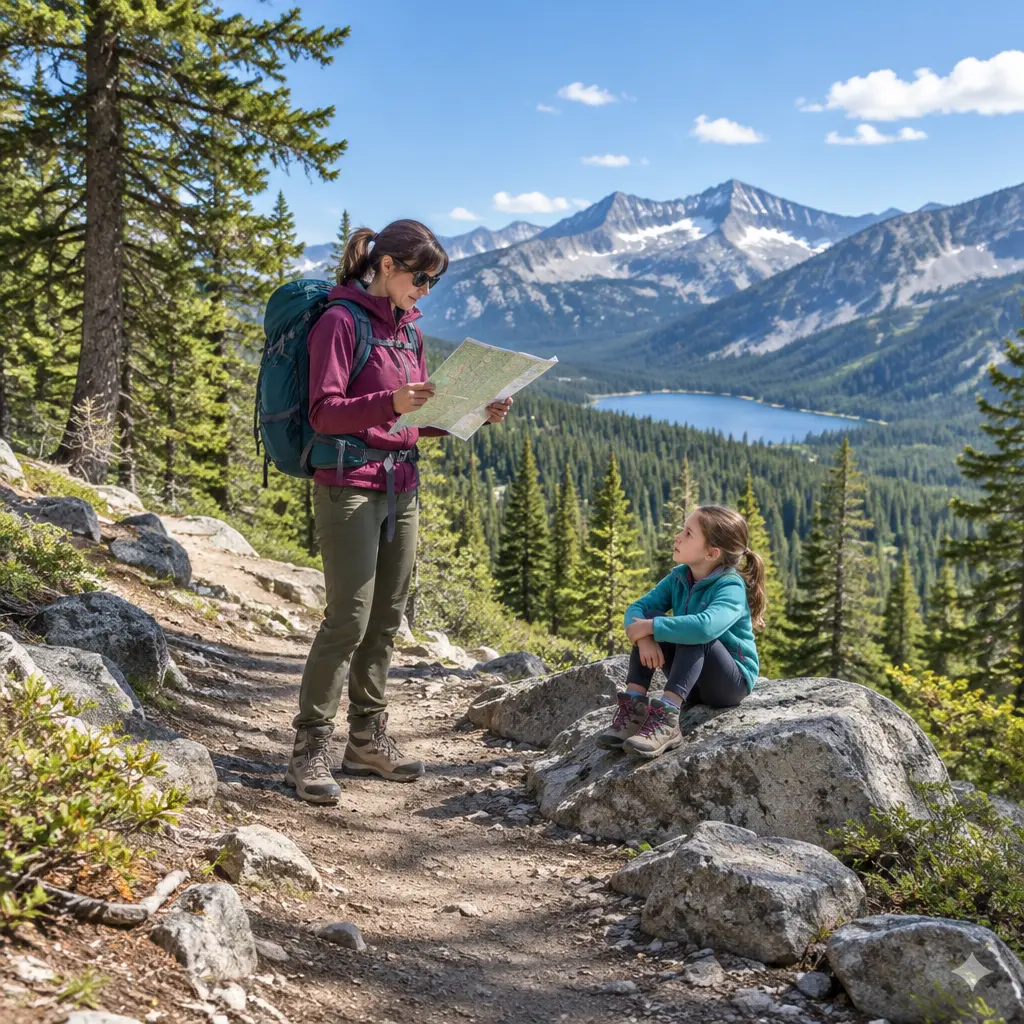
Imagine a family planning a steep morning hike with a six-year-old whose usual walks are shorter and mostly level. Instead of treating the published route time as a target, the adults check elevation, shade, water access, and the forecast, then select a shorter loop with a turnaround point. They start early, pause regularly, and keep the afternoon free. If the child becomes unusually tired or conditions worsen, they turn back and use the backup plan. The example illustrates the central principle: the itinerary adapts to the child and conditions, not the other way around.
Conclusion: Pace the Adventure Around the Youngest Traveler
Adventure-holiday pacing works best when families match route difficulty, activity duration, and recovery to the youngest traveler’s demonstrated stamina. Health recommendations from the CDC and WHO encourage children’s regular movement, but they are not endurance targets for a single excursion. Choose terrain carefully, plan breaks and hydration, protect sleep, and keep a shorter alternative available. Before the next trip, review the route and conditions together, agree on a turnaround plan, and let the child’s wellbeing—not the itinerary—set the day’s pace.
Sources: Centers for Disease Control and Prevention, Physical Activity Guidelines for School-Aged Children and Adolescents, https://www.cdc.gov/physical-activity-basics/guidelines/children.html; World Health Organization, WHO Guidelines on Physical Activity and Sedentary Behaviour, https://www.who.int/publications/i/item/9789240015128; American Academy of Pediatrics, Heat Stress and Exercising Children and Adolescents, https://publications.aap.org/pediatrics/article/128/3/e741/30666/Heat-Stress-and-Exercising-Children-and; National Park Service, Ten Essentials for Hiking, https://www.nps.gov/articles/10essentials.htm; Centers for Disease Control and Prevention, Heat and Health, https://www.cdc.gov/heat-health/