
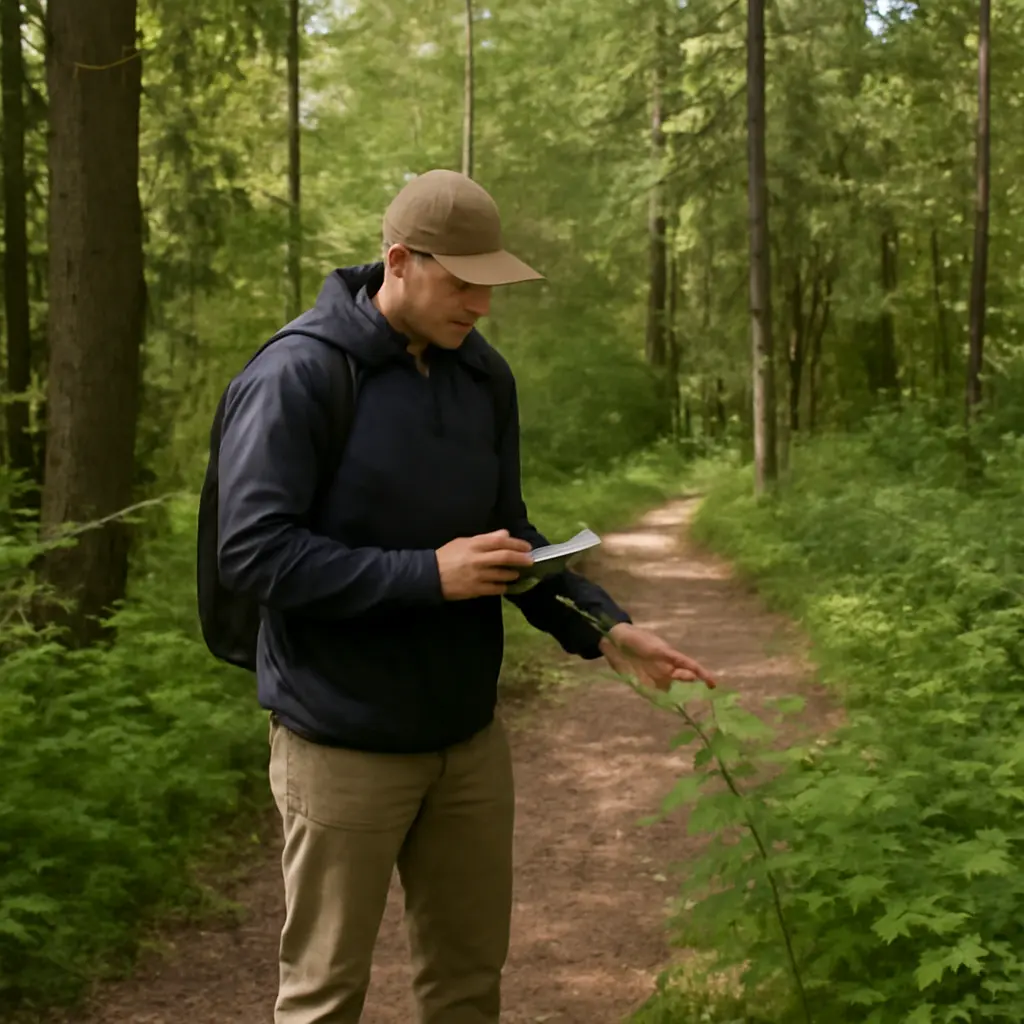
Forest walks and field exploration are family activities that combine time outdoors with noticing, learning, and shared discovery. They can turn an ordinary outing into a lasting family memory: children might compare leaf shapes, watch insects, or follow a trail while adults share stories and attention. Research links contact with nature to children’s well-being and attention, while the National Recreation and Park Association reports that parks are widely used for recreation and connection. The ideas below explain how to plan safe explorations, make observation meaningful, include different ages, and preserve memories without disturbing wildlife.
Forest walks strengthen family connection and nature engagement
A forest walk is a purposeful or recreational walk through a wooded area; field exploration is a closer investigation of a place, using observation and simple questions to learn about its plants, animals, landforms, and seasonal changes. Together, they range from an easy park stroll to a guided nature study. The U.S. National Park Service describes the outdoors as a setting for recreation, learning, and connection, while the World Health Organization recognizes accessible green spaces as important environments for health and well-being.
The family value lies not in covering a particular distance but in sharing attention. A child who points out a feather or a parent who explains how rain shapes a trail creates a moment of joint discovery. Such experiences can support conversation, curiosity, and a sense of belonging to a place. A 2019 review in Science Advances found that nature experiences are associated with benefits across several areas of health and well-being, while noting that effects vary by setting and study.
A relaxed walk makes room for conversation
A relaxed family walk prioritizes comfort and shared pace over distance or speed. It can be as simple as a loop in a local woodland, a short path beside a stream, or a visit to a neighborhood park. Frequent pauses let children ask questions, adults notice details, and family members talk without the demands of screens or a busy schedule. Choose a route with a clear turnaround point so the outing can be shortened if weather, energy, or mobility needs change.
Field exploration turns noticing into learning
Field exploration means observing a natural place carefully and asking questions about what is present and how it changes. Families can compare leaves, look for signs of animal activity, listen for bird calls, or notice where sunlight and moisture collect. The National Association for the Education of Young Children emphasizes that children learn through active investigation and meaningful interaction with their environment. Keep exploration observational: photographs, sketches, and verbal descriptions preserve discoveries without requiring anyone to collect plants, disturb nests, or handle wildlife.
Thoughtful planning makes forest outings safer and more inclusive
Planning is the practical bridge between the idea of an outing and a positive shared experience. The Centers for Disease Control and Prevention advises people spending time outdoors to prepare for conditions such as heat, insects, and exposure to ticks. Families should check local park guidance and weather, choose a route suited to the youngest or least mobile participant, and carry water, snacks, appropriate clothing, and a basic first-aid kit. Trail rules and conditions differ, so current local information matters more than a one-size-fits-all checklist.
Route choice should match the family
A family-friendly route is one that fits participants’ abilities, comfort, and available time. Look for a clearly marked path, manageable terrain, places to rest, and an easy way back. Families using strollers, wheelchairs, or mobility aids can check whether a park provides accessible paths and facilities; the National Park Service’s accessibility information can help visitors plan at participating sites. Tell children the basic plan, agree on a stopping point, and establish a simple rule to stay within sight or hearing of the group.
Weather, water, and wildlife precautions support enjoyment
Outdoor safety means anticipating common risks while keeping the outing enjoyable. Dress in layers, bring drinking water, use sun protection when appropriate, and check for local advice about ticks and other biting insects. The CDC recommends measures such as using EPA-registered insect repellents as directed and checking for ticks after time in areas where they may be present. Do not approach or feed wild animals; observe them from a respectful distance, and follow posted instructions about streams, cliffs, fire, and trail closures.
Simple activities make exploration memorable across ages
A small activity can give a walk a shared purpose without turning it into a lesson. The best prompts are open-ended and flexible: “What changed since our last visit?” or “Where do you think this trail gets wetter?” The National Association for the Education of Young Children’s guidance on playful learning supports giving children room to explore, make predictions, and explain what they notice. Adults can participate too, modeling curiosity rather than supplying every answer.
Nature scavenger hunts focus attention
A nature scavenger hunt is a search for categories of things to observe, such as a rough surface, a seed, a bird sound, or a leaf with a different shape. Use prompts that do not require collecting specimens. For younger children, pictures or simple clues can help; older children can record where they made each observation. A “noticing list” is often better than a race, because it encourages the group to look carefully and move at a pace that works for everyone.
Nature journaling preserves discoveries
Nature journaling is a record of outdoor observations made through words, sketches, maps, or photographs. Families might draw a tree, describe cloud patterns, or note which flowers are visible during a return visit. The journal does not need to be scientifically exact: its purpose is to capture what the family noticed and wondered about. Repeated entries can make seasonal change visible, turning a familiar path into an evolving family record.
Seasonal visits create a living family timeline
Returning to the same location in different seasons helps families compare changes in light, weather, vegetation, and animal activity. A spring visit might focus on new growth, while an autumn walk invites attention to changing leaves and seeds. Avoid assuming that every species or seasonal sign will appear: local climate and habitat shape what is present. A simple photo from the same safe viewpoint can document change over time without disturbing the site.
Respectful exploration helps protect the places families cherish
Family exploration is most sustainable when it leaves the natural setting as it was found. The Leave No Trace Center for Outdoor Ethics promotes practices including planning ahead, disposing of waste properly, and respecting wildlife. On a family outing, this can mean staying on designated trails, packing out litter, leaving rocks and plants in place, and keeping noise low near animals or other visitors. These habits also give children a practical way to connect care for nature with everyday choices.
Observation is safer than handling
Wildlife observation means watching animals without chasing, touching, feeding, or blocking their movement. Children can use binoculars or zoom photography where appropriate, but should not approach nests, dens, or young animals. Plant observation can be just as engaging: notice leaf edges, bark patterns, or the way a plant responds to shade. Following park rules protects both visitors and living things, and it helps ensure that the place remains available for future visits.
A real-world example: revisit a local trail
Consider a family that chooses a short, marked loop near home and visits it once each season. On the first walk, they identify a comfortable resting spot and notice the sounds around them. Later visits add a leaf sketch, a photograph from the same viewpoint, and a note about rainfall or trail conditions. This modest routine combines movement, conversation, observation, and memory-making without requiring specialized gear or travel. It also gives children a concrete example of how a familiar place changes and why care for shared spaces matters.
Conclusion: make time for shared discovery
Forest walks and field exploration help families build memories through attention, conversation, and repeated encounters with nature. A relaxed route supports connection; simple observation activities invite curiosity; preparation makes outings safer and more inclusive; and respectful habits protect the places that make future discoveries possible. Start with a nearby path, choose one observation prompt, and let each person contribute at their own pace. For further ideas, consult local park services, nature centers, and the outdoor safety and stewardship guidance listed below.
Sources: World Health Organization, Urban green spaces and health: a review of evidence, 2016, https://www.who.int/europe/publications/i/item/9789289052498; Twohig-Bennett, C. and Jones, A., The health benefits of the great outdoors: A systematic review and meta-analysis of greenspace exposure and health outcomes, Science Advances, 2018, https://www.science.org/doi/10.1126/sciadv.aat3162; Centers for Disease Control and Prevention, Preventing Tick Bites, https://www.cdc.gov/ticks/prevention/; National Park Service, Accessibility, https://www.nps.gov/subjects/accessibility/index.htm; National Association for the Education of Young Children, Developmentally Appropriate Practice, https://www.naeyc.org/resources/position-statements/dap; Leave No Trace Center for Outdoor Ethics, The Seven Principles, https://lnt.org/why/7-principles/