
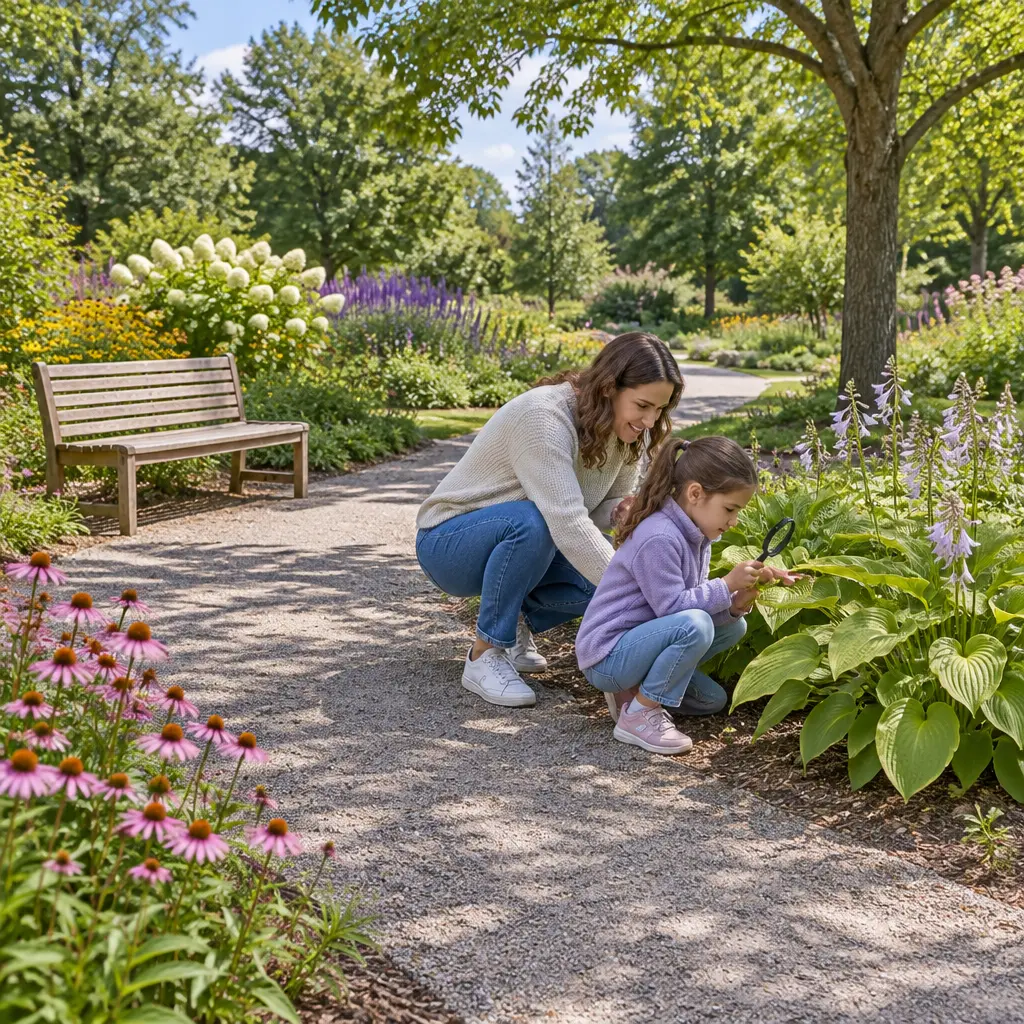
A discovery experience is a child-centered opportunity to explore a place, idea, or activity through observation and hands-on participation. The most memorable experiences—from a tide-pool visit or science museum investigation to cooking with a grandparent—pair novelty with active involvement, conversation, and time to reflect. Research supports the value of that approach: the National Research Council describes learning as shaped by children’s experiences and active engagement, while the National Endowment for the Arts has reported an association between arts participation and positive outcomes for children. Families can use these principles to choose outdoor, cultural, scientific, and everyday adventures that are enjoyable, accessible, and likely to stay with children.
Discovery Experiences and Memorable Learning
A discovery experience is more than a special outing. It gives a child something meaningful to notice, try, question, or create. The National Research Council’s report How People Learn: Brain, Mind, Experience, and School explains that learners build understanding by connecting new experiences with prior knowledge and actively organizing what they learn. For families, that means the strongest memories are often made not by seeing the most attractions, but by having space to participate and make personal connections.
A useful discovery experience usually has several ingredients: an element of novelty, an age-appropriate challenge, opportunities to make choices, and a shared moment with a caring adult. The experience need not be expensive or far from home. A neighborhood nature walk, a library event, or a child-led visit to a local market can all invite sustained curiosity.
Active participation makes an outing personal
Active participation means children do something with what they encounter: they sketch a building, compare shells, ask a guide a question, or help prepare a meal. The National Research Council emphasizes that learning depends on what learners bring to a situation and how they engage with it. Instead of giving children a complete explanation at every stop, adults can invite them to predict, investigate, and describe what they notice.
Novelty and manageable challenge create a sense of discovery
Novelty is a new sight, setting, or problem; a manageable challenge asks a child to stretch without making the activity overwhelming. These qualities can turn an ordinary visit into a memorable one: finding a route on a map, spotting three kinds of leaves, or ordering a snack in a new language. The goal is not to make every activity difficult, but to offer children a meaningful role and the support to succeed.
Outdoor Discovery Experiences for Children
Outdoor discovery brings children into direct contact with living things, weather, landscapes, and seasonal change. The National Wildlife Federation’s Green Hour initiative encourages children to spend time in nature, and the U.S. Environmental Protection Agency notes that outdoor activity can support physical health and well-being. A memorable nature experience can be as simple as watching ants move food, listening for birds, or returning to the same tree over several months to see how it changes.
Nature walks and local wildlife observation
A nature walk is a guided or self-directed exploration of an outdoor area, with attention to plants, animals, rocks, sounds, and patterns. Give children a small mission—find something smooth, identify a bird call, or notice signs of pollinators—while leaving room for unexpected discoveries. The U.S. Fish and Wildlife Service’s pollinator education resources can help families learn why bees, butterflies, and other pollinators matter to ecosystems and food production.
A simple field notebook can extend the experience. Children might draw an observation, record the weather, or revisit a spot and compare what has changed. This turns a one-time outing into an ongoing investigation and makes the child’s own questions central.
Gardens, farms, and food-growing experiences
Gardening and farm visits connect children with the origins of food and the time, care, and conditions required for plants to grow. A child can plant seeds, measure shoots, water a garden, or taste a vegetable they helped harvest. The U.S. Department of Agriculture’s Farm to School program describes school and community activities that connect children with local food, agriculture, and nutrition; families can adapt the same idea at home or through nearby farms and community gardens.
Cultural and Creative Discovery Experiences
Cultural and creative experiences introduce children to stories, art, music, performance, and ways of life beyond their everyday routines. They can help children interpret different perspectives while also giving them a chance to express their own. The National Endowment for the Arts’ research on arts education has found associations between arts engagement and academic and social outcomes, though such findings should not be taken to mean that a single visit guarantees a particular result.
Museums and historic places
A museum or historic site becomes more engaging when children investigate rather than simply move from display to display. Before a visit, choose one question—how people communicated before phones, for example, or how an object was made. During the visit, invite the child to select a favorite exhibit and explain why it stood out. The Smithsonian Institution’s family learning resources offer activity ideas that encourage observation, conversation, and exploration across its museums and collections.
Music, theatre, and hands-on arts
Creative discovery includes listening to live music, seeing a performance, making a print, or building a sculpture from recycled materials. Children benefit from both encountering art and making it: they can notice rhythm, mood, color, movement, and story, then experiment with those elements themselves. The National Endowment for the Arts’ research on arts participation provides broader context for the value of access to arts learning; local libraries, cultural centers, and community organizations can make these experiences more affordable.
Science and Everyday-Life Discovery Experiences
Science discovery does not require a laboratory. Children can explore cause and effect through simple experiments, observe patterns in daily life, and learn how tools help people solve problems. The National Science Teaching Association’s guidance on science learning encourages learners to ask questions, investigate phenomena, and use evidence—practices families can support through play and conversation.
Science centers and interactive exhibits
Science centers are designed to let visitors manipulate objects, test ideas, and observe results. Their hands-on exhibits can make abstract concepts—such as balance, sound, motion, or electricity—more tangible. At a visit, let children choose an exhibit to investigate, then ask what they changed and what happened. This simple sequence supports observation and reasoning without turning the outing into a quiz.
Cooking, building, and neighborhood exploration
Everyday activities can become discovery experiences when children take part in planning and problem-solving. Cooking introduces measurement, sequence, and changes in materials; building with blocks or cardboard invites design and testing; a neighborhood walk can reveal how roads, signs, shops, and public spaces work. The National Association for the Education of Young Children highlights the importance of play in children’s development and learning, supporting the idea that purposeful exploration can happen in ordinary settings as well as formal attractions.
How to Make Discovery Experiences More Memorable
A memorable experience is not necessarily the longest or most elaborate. Children are more likely to remain engaged when the activity fits their age, interests, energy, and access needs. Planning around a child’s curiosity—and allowing the plan to change when something unexpected captures attention—can make an outing feel personally meaningful.
Follow the child’s questions
Open-ended questions help children explain their thinking: “What do you notice?”, “What do you think will happen?”, and “What would you like to find out?” Adults can add information when useful, while resisting the urge to supply every answer immediately. The National Research Council’s account of learning supports connecting new information with a learner’s existing ideas, making children’s questions a practical starting point.
Use a simple before-during-after routine
Before the activity, share a little context and invite the child to choose one thing to look for. During it, leave time for exploration, breaks, and conversation. Afterwards, help the child recall the experience by drawing, telling a story, sharing a photograph, or trying a related activity at home. This gentle reflection gives children a chance to connect details and revisit what interested them most.
Make access and comfort part of the plan
Accessibility includes practical details such as cost, transportation, restrooms, sensory conditions, mobility, language, and food. Check venue information in advance, ask about accommodations, and bring familiar supports where appropriate. A shorter visit with a comfortable pace may be more rewarding than trying to see everything. Public libraries, parks, community museums, and free cultural days can also help families find discovery opportunities within their budgets.
Conclusion: Turn Curiosity into Shared Memories
Discovery experiences children remember combine active participation, manageable novelty, and meaningful connection. Outdoor exploration, gardens, museums, creative arts, science centers, and everyday projects all offer ways to learn through doing. Research from the National Research Council, National Endowment for the Arts, and other education and public agencies supports the broader value of engagement, play, and access to enriching experiences.
Choose one experience that fits your child’s interests, make room for questions, and let the child help shape what happens. A small, attentive adventure can become the beginning of a lasting interest—and a memory your family returns to long after the outing ends.
Sources: National Research Council, How People Learn: Brain, Mind, Experience, and School, https://nap.nationalacademies.org/catalog/9853/how-people-learn-brain-mind-experience-and-school-expanded-edition; National Endowment for the Arts, Arts Education and Child Outcomes, https://www.arts.gov/impact/research/arts-data-profile-series; U.S. Environmental Protection Agency, Benefits of Spending Time Outdoors, https://www.epa.gov/children/benefits-spending-time-outdoors; National Wildlife Federation, Green Hour, https://www.nwf.org/Kids-and-Family/Connect-with-Nature; U.S. Fish and Wildlife Service, Pollinators, https://www.fws.gov/initiative/pollinators; U.S. Department of Agriculture, Farm to School, https://www.fns.usda.gov/cfs/farm-school; Smithsonian Institution, Learning Lab and Family Resources, https://learninglab.si.edu/; National Science Teaching Association, Position Statements and Science Learning Resources, https://www.nsta.org/nstas-official-positions; National Association for the Education of Young Children, The Importance of Play, https://www.naeyc.org/resources/topics/play