
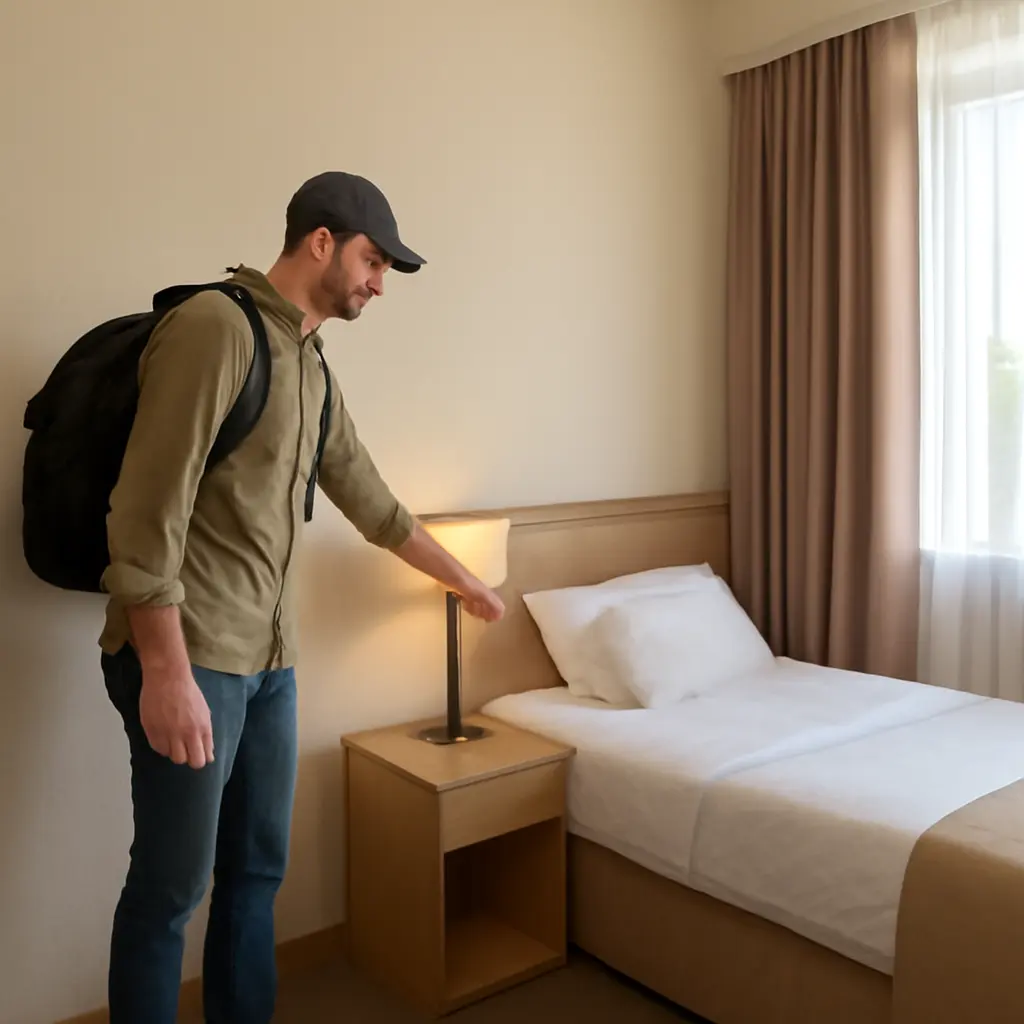
A smart accommodation choice is a place to stay selected for features that support better rest, such as effective sound control, reliable climate settings, comfortable bedding, and a room location away from disturbances. To skip sleepless nights while traveling, prioritize these sleep-supporting details over appearance alone: check noise and room policies, compare bed and temperature features, choose a suitable location, and confirm accessibility or special requests before booking. The Centers for Disease Control and Prevention (CDC) recommends that adults get at least seven hours of sleep per night, while travel, noise, light, and unfamiliar surroundings can make that harder to achieve.
Choosing Accommodation Features That Protect Sleep
Sleep-friendly accommodation means lodging whose environment and services make it easier to obtain adequate, uninterrupted rest. The CDC’s sleep guidance emphasizes both sufficient duration and healthy sleep habits; in practical travel terms, a comfortable bed is only one part of the equation. Guests should also consider noise, light, room temperature, ventilation, and whether the property can meet specific needs.
The World Health Organization identifies environmental noise as a public-health concern and publishes guidance on reducing exposure, including at night. While a hotel cannot eliminate every sound, features such as well-sealed windows, quiet-room policies, and thoughtful room placement can reduce common disruptions. The best choice depends on the traveler: a light sleeper may value a courtyard-facing room, while someone sensitive to heat may prioritize individual climate control.
Noise control and quiet-room options
Noise control refers to measures that limit sound entering or traveling through a room. Before booking, check whether reviews repeatedly mention street noise, thin walls, elevators, bars, or late-night activity. Contact the property to request a room away from lifts, event spaces, busy roads, and service areas. “Quiet room” is not a universal certification, so treat it as a request to verify rather than a guarantee.
For added confidence, look for descriptions of double-glazed windows, sound-insulating construction, or quiet hours, and ask whether those features apply to the specific room category. The WHO’s Environmental Noise Guidelines for the European Region discuss the health effects of environmental noise and recommend reducing exposure, particularly during sleep. Travelers should still bring earplugs if they are sensitive to unpredictable sounds.
Blackout conditions and light management
Light management means limiting unwanted illumination from windows, corridors, electronics, and outdoor signage. Blackout curtains or shades, well-fitted window coverings, and controllable bedside lighting can help travelers keep a room dark at night. When property photos are unclear, ask whether curtains fully cover the window and whether outside lights shine directly into the room.
The National Institute of General Medical Sciences explains that the body’s circadian rhythms respond to environmental cues, including light and darkness. For travelers crossing time zones, controlling evening light and seeking daylight at appropriate times can support adjustment. A sleep mask is a useful backup, especially in shared accommodation or rooms with bright corridor lighting.
Matching Beds, Temperature, and Room Type to Your Needs
Once noise and light are considered, the next accommodation attributes are the bed, room climate, and layout. These are highly individual: a firm mattress may suit one guest but feel uncomfortable to another, and a single central thermostat may not provide the control some travelers need. Review the exact room category rather than assuming every room at a property has the same features.
Bed quality and bedding details
Bed quality includes mattress condition, support, pillow options, bedding cleanliness, and enough space for the number of guests. Hotel listings often describe bed size but rarely provide a standardized measure of mattress firmness. Read recent reviews for recurring comments about sagging mattresses, uncomfortable pillows, or poor housekeeping, and ask whether additional pillows or blankets are available.
If you have allergies or specific bedding requirements, contact the property before arrival to ask about feather-free pillows, mattress encasements, or fragrance-free cleaning options. These requests may depend on availability, so confirmation is more reliable than assuming a preference can be accommodated at check-in.
Temperature, ventilation, and indoor comfort
Thermal comfort is the ability to maintain a room temperature that feels suitable for rest. Look for individually controlled heating or air conditioning, clear information about seasonal operating hours, and a way to open a window if fresh air matters to you. In older buildings, central systems may offer limited room-by-room control, so check recent guest feedback during the season you plan to travel.
The U.S. Environmental Protection Agency’s guidance on indoor air quality notes that ventilation and pollutant sources affect indoor environments. If you are sensitive to smoke, strong fragrances, or dampness, prioritize smoke-free policies and promptly report odors or signs of moisture. A property’s stated policy is helpful, but recent reviews can reveal whether it is consistently enforced.
Room layout, occupancy, and accessibility
A suitable room layout gives each guest enough space and reduces practical disruptions. Families may benefit from adjoining rooms or a suite, while travelers sharing a room may sleep better with separate beds. Guests with mobility, hearing, or other accessibility needs should confirm the specific features required, such as step-free routes, visual alarms, accessible bathrooms, or proximity to elevators.
Accessibility labels vary between booking platforms and properties. The U.S. Department of Justice’s ADA guidance explains requirements for accessible lodging in the United States, but travelers should still verify details directly because room dimensions and features differ. Ask the property to confirm the exact room assignment and any equipment arrangements in writing.
Selecting a Location and Property Type for Restful Nights
A room’s immediate surroundings can matter as much as its furnishings. Location choices include city-center hotels, airport properties, roadside motels, vacation rentals, and quieter residential stays. Each can be sleep-friendly when it matches the trip’s purpose, but convenience should be weighed against predictable sources of nighttime activity.
Hotels, rentals, and airport stays
Hotels may offer staffed reception, housekeeping, and standardized services, while vacation rentals can provide more space and kitchen facilities. Neither category guarantees quiet. Check house rules, neighborhood reviews, check-in arrangements, and whether the bedroom faces a shared courtyard or active street. For an early flight, an airport hotel can reduce transport stress, but confirm whether aircraft noise is addressed through insulation or room placement.
For rentals, review information about quiet hours, nearby nightlife, and host responsiveness. For hotels, ask about renovation work, events, and late-night food or entertainment areas. A recent review that describes a specific disturbance is more useful than a broad rating alone.
Neighborhood activity and transport noise
Neighborhood activity includes traffic, nightlife, construction, public transport, and early-morning deliveries. Use a map to check whether the property is beside a major road, rail line, venue, or construction site, then compare that information with guest reviews. If you need to stay near a busy hub, request a higher floor or a room facing away from the source, while recognizing that these requests are subject to availability.
For a visual comparison, create a simple booking checklist or scorecard rating each option for noise, darkness, temperature control, bedding, and location. This makes trade-offs visible—for example, a central property may save commute time but require stronger soundproofing and more careful room selection.
Booking and Arrival Steps That Prevent Sleep Disruptions
Even a well-chosen property can disappoint if key requests are not confirmed. A short pre-booking check and a clear arrival plan help reduce avoidable surprises, especially for travelers with fixed schedules, medical needs, or strong environmental sensitivities.
Verify claims before you reserve
Treat listing descriptions as a starting point. Check recent reviews, compare room-specific photos, read cancellation and construction notices, and contact the property with precise questions. Ask whether the room has individual climate control, blackout coverings, a quiet location, and the bed configuration shown in the reservation. Save written confirmations in case details need to be resolved on arrival.
Make and confirm special requests
A special request is a preference or accommodation that the property may be able to provide but does not necessarily guarantee. Examples include a room away from the elevator, a feather-free pillow, an accessible room, or a crib. State the need clearly when booking, then reconfirm shortly before arrival. If a requirement is essential, do not rely on an unconfirmed note in a reservation profile.
Use a practical arrival routine
On arrival, check the room promptly for noise, light leakage, temperature, and the requested bed setup. Report problems while a room change may still be possible. Keep familiar sleep essentials—such as earplugs, an eye mask, or a preferred bedtime item—in your carry-on, and follow a consistent wind-down routine where practical. The CDC notes that sleep duration and habits matter; accommodation choices support sleep but cannot replace healthy routines.
Conclusion: Choose Accommodation Around the Sleep You Need
Smart accommodation choices begin with the features most likely to protect rest: quiet surroundings, effective light control, comfortable bedding, suitable temperature and ventilation, and a room layout that fits the traveler. Property type and location add further trade-offs, while direct verification turns a promising listing into a more dependable plan. Before booking, compare recent reviews, confirm essential features with the property, and prepare a small travel sleep kit. These steps cannot guarantee a perfect night, but they can make restful sleep a deliberate part of the trip rather than an afterthought.
Sources: Centers for Disease Control and Prevention, About Sleep, https://www.cdc.gov/sleep/about/index.html; World Health Organization Regional Office for Europe, Environmental Noise Guidelines for the European Region, https://www.who.int/europe/publications/i/item/9789289053563; National Institute of General Medical Sciences, Circadian Rhythms, https://www.nigms.nih.gov/education/fact-sheets/Pages/circadian-rhythms.aspx; U.S. Environmental Protection Agency, Care for Your Air: A Guide to Indoor Air Quality, https://www.epa.gov/indoor-air-quality-iaq/care-your-air-guide-indoor-air-quality; U.S. Department of Justice, ADA Requirements: Hotels and Other Places of Lodging, https://www.ada.gov/resources/ada-and-hotels/